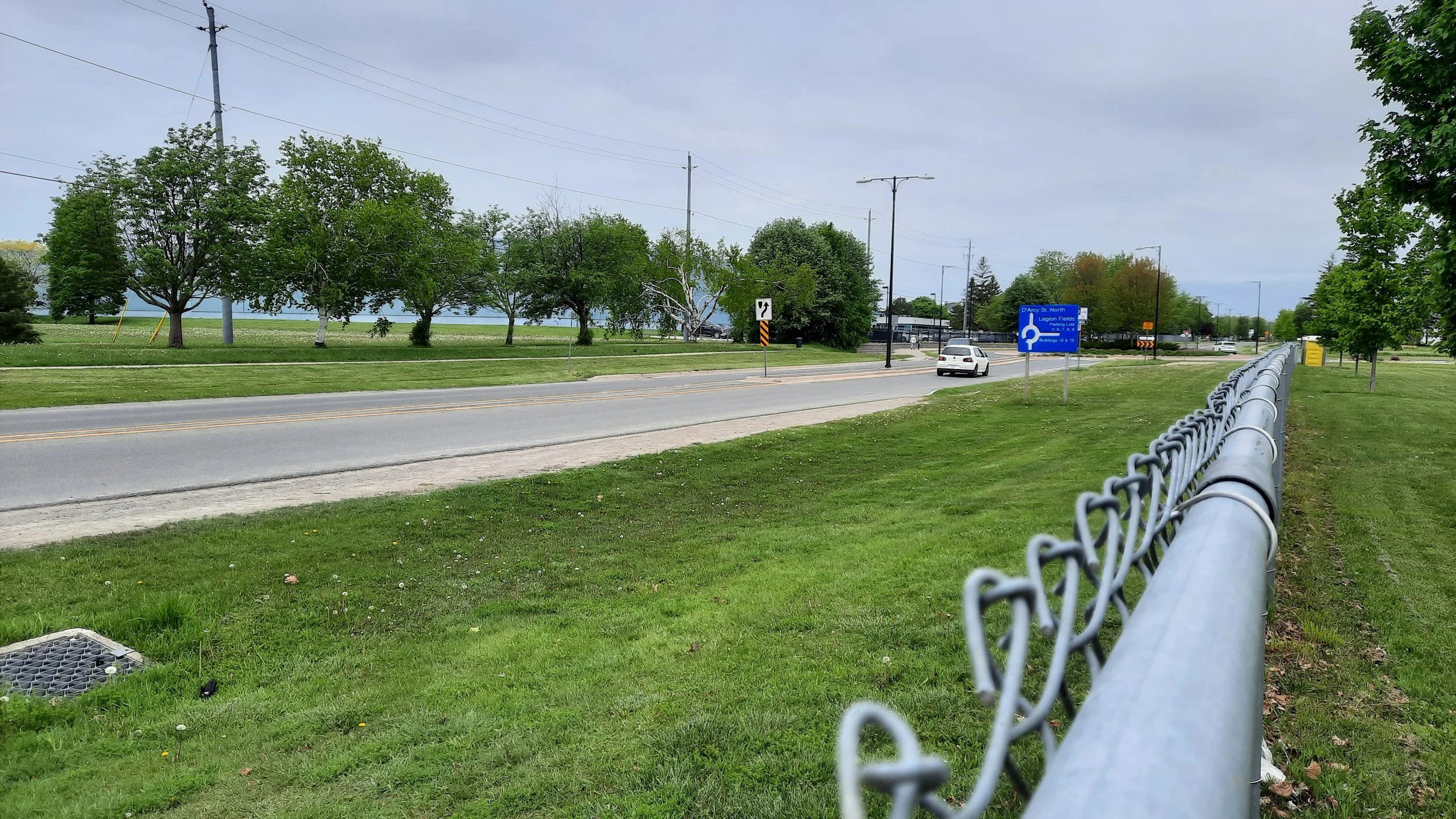
Cambium conducted a geotechnical investigation,hydrogeological report and investigation, a Phase I and Phase II Environmental Site Assessment (ESA) report and investigation and an excess soil investigation, to provide information on site preparation, foundation design and ground improvement for the proposed construction of public water supply infrastructure in eastern, Ontario.
Cambium drilled a total of 21 boreholes, ranging from 3.5 to 24.1 mbgs, for geotechnical, hydrogeological and environmental purposes, using a truck mounted rig equipped with 150mm outside diameter solid stem augers and split spoon sampling equipment and leveraging a portable mechanized driven hammer (Ram Sounder) and split-spoon equipment to acquire the required subsurface data for reporting where a drill rig could not be used around a bridge crossing.
The Phase I ESA identified pesticides at the site related to historical on-site operations. Cambium developed a Phase II work program to investigate contaminants of potential concern.
Soil samples were sent for physical laboratory testing at Cambium’s CCIL-certified materials testing Laboratory. Testing included particle size distribution analyses (LS-702, 705), Atterberg limits testing (LS-704), and natural moisture content testing (LS-701). Applicable regulations for the Environmental Phase I report included O.Reg. 153/04, O.Reg. 278/05, O.Reg. 278/04.
Cambium’s work resulted in several cost-savings for the client:
During the investigation process it was discovered that flaggers originally in the budget were not needed for the drilling.
Cambium recommended that the client collect environmental samples during the geotechnical drilling to avoid the cost of a second mobilization of a drill rig and a Cambium technician.
Cambium recommended that soil cuttings on-site were considered inert and could be disposed of on property in accordance with the regional sewer use by-law. Alternatively, Cambium could arrange for their removal from site.